Time and place
- Trial Lecture at 10.15 - 11.00 in room B-137
- Defence starts at 12.15 in room B-137
Trial lecture title:
"Why Prompting Limits AI: Rethinking AI Interfaces for Safer, More Useful Systems"
Supervisors
- Primary supervisor, Professor Joao C Ferreira, Faculty of Logistics, Molde University College
- Secondary supervisor, Associate Professor Berit Irene Helgheim, Faculty of Logistics, Molde University College
Adjudication committee
- Rogerio Pais Dionisio, Politéchnico de Castelo Branco, Portugal
- Elinda Kajo Mece, University of Tirana, Albania
- Professor Swati Aggarwal, Molde University College
Chair of defence
Professor Harald Martin Hjelle, Faculty of Logistics, Molde University College
Summary
Background
Modern hospitals collect vast amounts of patient data, but much of it is stored as free-text notes that computers cannot efficiently process. This makes it difficult to search patient histories, automate reporting, or use data for clinical decision support. Existing AI tools are often designed for English and fail to handle medical terminology in other languages. This thesis was motivated by the need to create a reliable, adaptable solution that can turn unstructured health records into structured information usable for patient care, research, and hospital management.
Findings
Hospitals store most clinical knowledge as free text, making it hard for computers to read and reuse. This thesis developed MediAlbertina, an AI-based text structuring tool that converts these notes into clean, searchable facts. Trained on real hospital records, it can accurately identify diseases, tests, and their status. The research also introduces clear rules that anyone can follow to label medical text consistently.
When connected to dashboards, the tool automatically generates patient summaries and screening lists without requiring doctors to change how they write. Although first tested on cardiology reports, the method can be adapted to other hospital departments and even other languages.
The work was carried out in collaboration with Lisbon’s largest public hospital, a U.S. technology company, and a Norwegian logistics university.
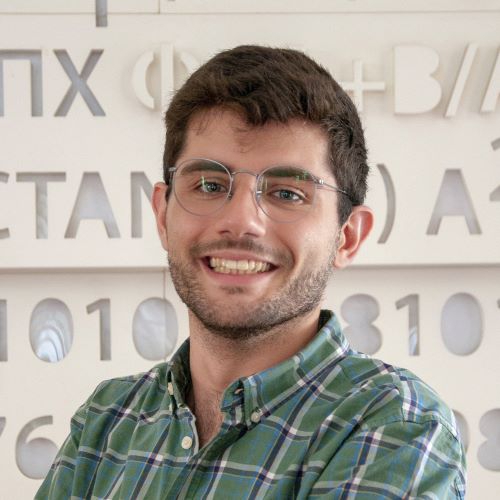
Luís Manuel Nobre de Brito Elvas (27) comes from Castelo Branco, Portugal. He has a Bachelor's degree in Computer Science from the School of Technology, Polytechnic Institute of Castelo Branco in 2019. He has a Master’s degree in Decision Support Systems from Iscte – University Institute of Lisbon in 2021.