2025
Previous
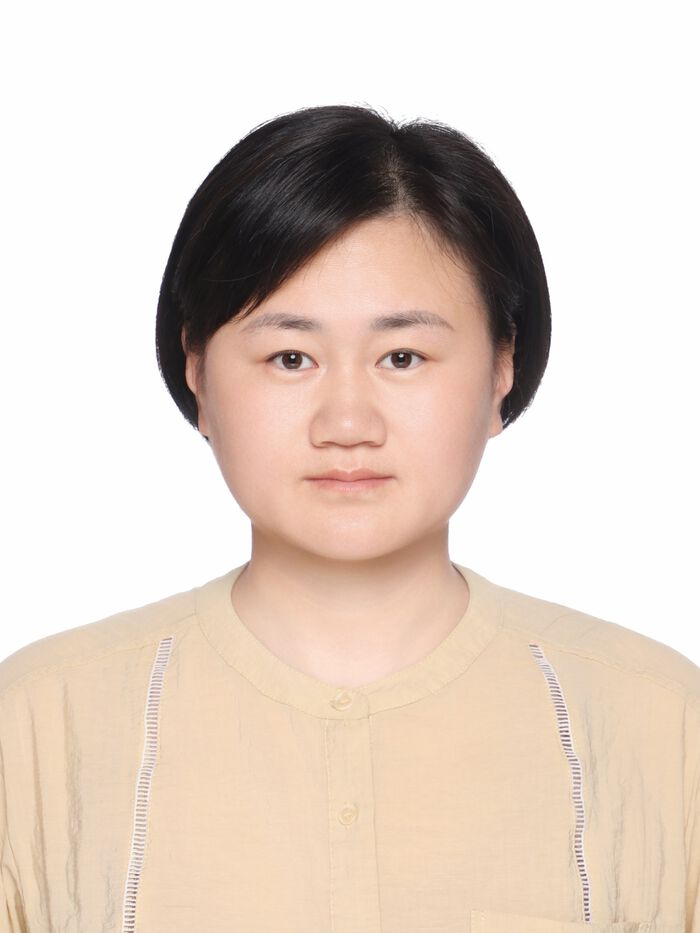
Can Meng holds her trial lecture and defends her PhD Thesis “Innovation and Firms’ Internationalization Strategies: A Study of Their Mutual Relationships and Contextual Influences” at Molde University College - Specialized University in Logistics.
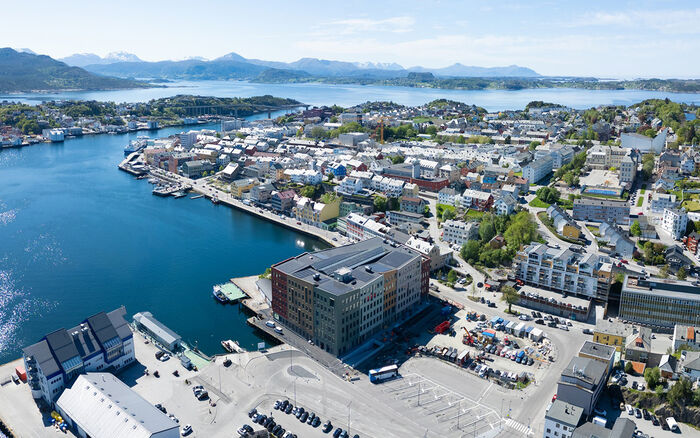
We are happy to welcome the Operations Research community to the NORS Annual Conference 2025 at Molde University College - Specialized University in Logistics. It is also a great pleasure to invite you all to our new campus in Kristiansund.

Molde University College is hosting the Profres Autmn PhD Symposium "Navigating Practice-Near Research: Opportunities and Challenges"
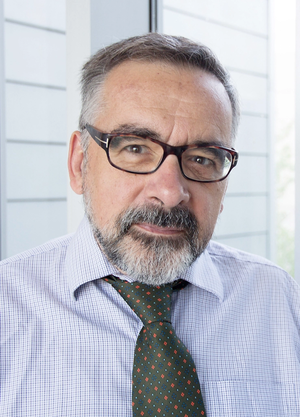
Gilbert Laporte is Professor Emeritus at HEC Montréal. He will provide some advice on how to write scientific papers with a strong emphasis on operational research papers. The presentation covers all the main components of a standard OR paper: title page, abstract, problem statement, literature review, model, algorithm, computational results, conclusions, references.
In today’s data-rich environment, researchers and professionals are increasingly expected to analyse complex relationships among variables—far beyond what traditional statistical techniques can handle. Structural Equation Modeling (SEM) and Confirmatory Factor Analysis (CFA) offer powerful tools to generate deep insights into latent constructs, measurement quality, and theoretical model testing.
.webp?alt=listing)
The EU-funded e-Hospital4Future project will have its closing event at Molde University College. Representatives for the Norwegian Directorate of Health, project participants and EU representatives will gather to sum up the project.
This practical-based course provides an in-depth introduction to stated choice survey design and modelling. It focuses on the definition, design, and deployment of rigorous and robust techniques, based on sound microeconomic theory. Investigating agents’ preferences with respect to hypothetical scenarios allows predicting the behavioural change that adopting any intervention policy could produce.