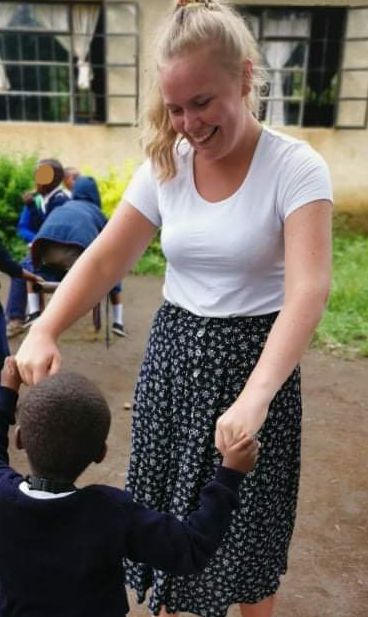
One of the reasons why I chose to join this project was to see how facilitation and implementation of human rights is being done in practice, in other countries than Norway. Due to Article 19 in CRPD, everyone has the right to an independent life and to be a part of the society. People with disabilities have the same rights as others to live independently and to be included in society, same as everyone else. State Parties are obliged to implement effective and appropriate measures in order to facilitate a complete inclusion and participation of persons with disabilities. This is very important for this right to become fully implemented (CRPD 2008).
I have been in Tanzania for almost 2 months. During my stay, I noticed how the children at Patandi primary school were helping each other. It struck med how this was both positive and negative. It was nice to see how the children cared about their fellow pupils and how well they treated each other. Also, I was both surprised and pleased to see so many children attending school. This is not the situation in Norway, where disabled children get professional helpers due their time at school. This made me wonder: do we by this practice, overprotect children with special needs here in Norway? I ask myself if Norway too should considerate to facilitate for children with special needs to help each other - at least to some extent.
My first week in Tanzania I witnessed a particularly touching scene. Two boys, one of them with albinism and impaired vision, and the other one 100% blind, followed each other to the bathroom. I watched them helping each other eating lunch, and find their way back to the classroom. It turned out that this was their everyday routine at Patandi primary school. It was truly heartwarming to see how they supported each other despite their disabilities.
Hence this experience, I wonder if Norway may be too overprotective of children with special needs. The children at Patandi primary school have no other choice than helping each other, especially during the lunch breaks. In fact, the teachers are not present during the breaks at all. If some of the students wants to go out during their break, they have no other choice than getting help from one of their fellow pupils. It was touching to see how well they looked after each other.
But does this practice also have negative consequences? Are the children allowed to be ‘just children’, or are they possibly given too much responsibility, too early? In my opinion, there are situations when the children should be taken care of by personnel, and not by another child. For instance, I witnessed a girl at Patandi wet herself in the classroom. She couldn’t reach the bathroom in time, and needed help to clean up afterwards. The teacher ordered one of the older girls to help her clean up. This is only one of many similar situations I experienced during my time in Tanzania.
In conclusion, it is in my opinion that Norway has a lot to learn from Tanzania. Especially I want to highlight how they manage to include the children with special needs, instead of overprotecting them. On the other hand, Tanzania has a lot to learn from Norway and still have a long way too go.